
Reviewed on 25 October 2026. Before choosing a marketing channel, decide what the business needs next: more people recognising the brand, more suitable enquiries or more completed orders. Those goals require different campaigns and different measurements.
A retailer with a working checkout and a software company selling a scoped project should not copy the same funnel. Start with the customer, offer and buying decision, then choose the channels that can support them.
Choose the outcome before the platform
| Business objective | What to put in front of people | What to measure |
|---|---|---|
| Brand awareness | An identifiable business, a relevant problem and evidence of the work | Reach in the intended audience, repeat visits and later enquiries |
| Service enquiries | A specific offer, relevant examples and an enquiry route | Successful submissions, qualified conversations and won work |
| Online sales | Product information, availability, delivery and checkout | Purchases, revenue, margin and repeat orders |
| Existing-customer growth | Product education, support and relevant follow-up | Retention, repeat purchases and expansion |
Awareness can contribute to sales without generating an immediate form submission. Conversely, a campaign can generate cheap enquiries that never fit the service. Agree what success means before comparing channels.
Check the destination before buying visits
Open the landing page on a phone. Does it describe the same offer as the ad or search result? Can the customer find the deliverables, evidence, price conditions and next step?
Keep the enquiry short enough to start a conversation. For project services, ask what is needed, who it is for and how to contact the buyer. Budget and timing can help qualify the work without forcing a person to invent an answer.
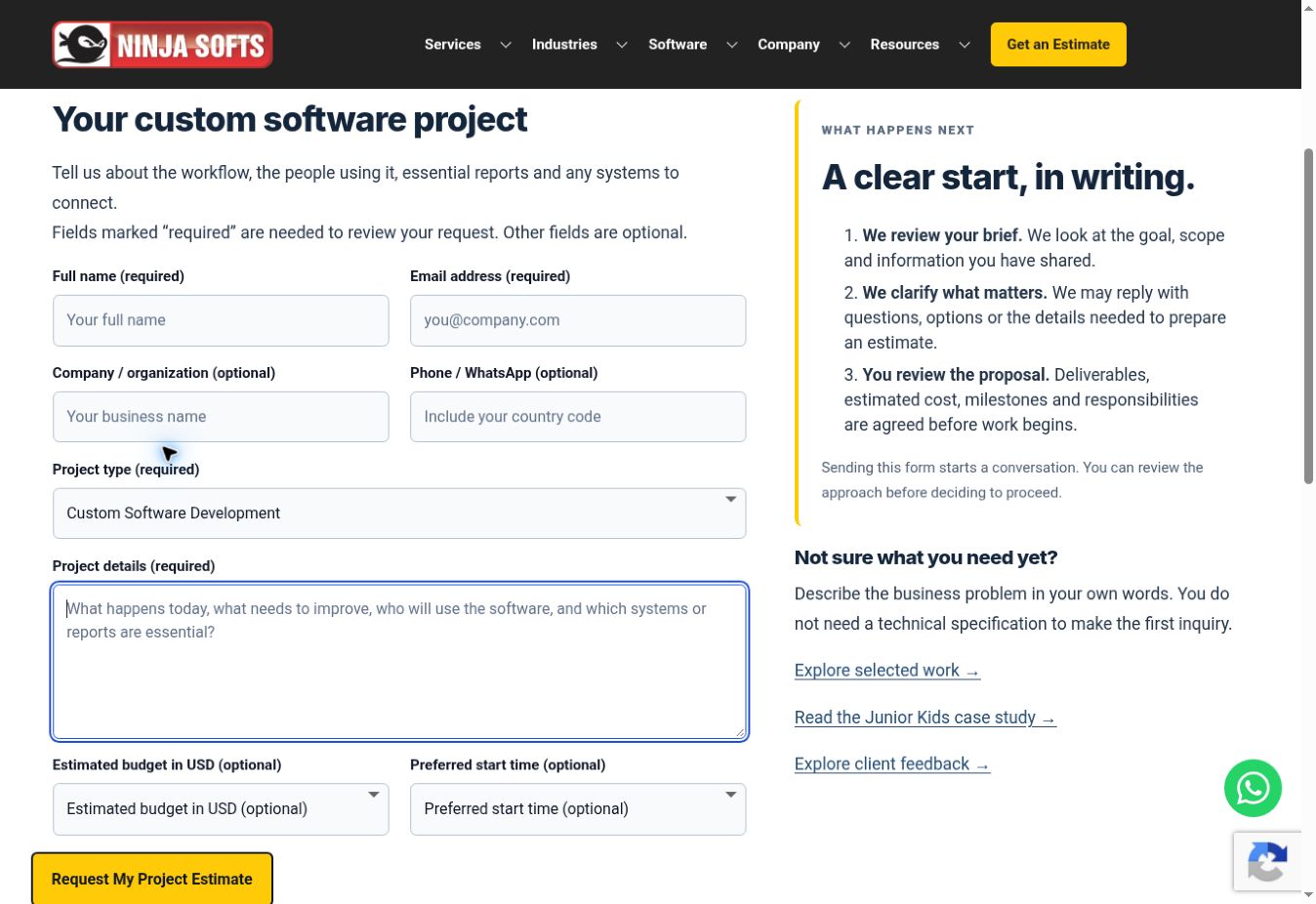
Test a valid submission through to the receiving inbox before a campaign starts. Also test an invalid email, a required field left empty and a repeated submission. Record what happens; do not assume a success message proves that delivery and follow-up work.
Use search to meet existing demand
SEO and search advertising suit questions and services people already look for. Map commercial searches to service or product pages, and educational questions to articles that help the buyer make a decision.
For paid search, group campaigns around an offer and destination rather than sending unrelated searches to the homepage. Review search terms, geographic settings and the enquiries produced. Keep advertising spend separate from setup, management and website-development costs.
SEO requires work on the offer, content, internal links and technical access. It is not a promise of a particular position or a replacement for an unconvincing service. Compare the choices in our Google Ads versus SEO guide.
Use social content to demonstrate the business
Show the work: a product demonstration, a decision made during a project, a customer’s question or a result supported by records. Adapt the format to the audience and the team available to maintain it.
Choose a manageable publishing rhythm. A small business can learn more from a few well-documented examples and the conversations they create than from a calendar of generic motivational posts.
Use paid social when the creative, audience and offer justify it. An attractive video view is a different outcome from a qualified enquiry; report them separately.
Prepare for AI search without selling a new shortcut
Google’s generative search guidance keeps the focus on SEO foundations, original information and pages that can be understood and accessed. Do not buy promises that an AI file or special phrase will guarantee recommendations.
Read Google’s guidance for generative AI search. For your content, add the information a buyer cannot get from a generic summary: a worked example, scope, screenshots, limitations and who performed the work.
Measure the steps without counting every click as a lead
Use GA4 for traffic and event reporting. Record a successful enquiry as a lead event; keep WhatsApp clicks, email clicks and form starts as separate actions. Google’s key-event tutorial explains the distinction between ordinary events and business outcomes.
Microsoft Clarity can help investigate where people stop, misclick or struggle through recordings and heatmaps. It complements event measurement. Configure consent and masking before using it, especially around enquiry forms, and compare performance after installation. See Clarity’s documentation.
Keep personal names, email addresses, phone numbers and project briefs out of analytics event parameters. Measure service categories and page locations instead; Google documents its PII restrictions.
Review the pipeline, not only the dashboard
For each enquiry, record the source where known, requested service, qualification, quotation and outcome. Compare cost per qualified enquiry and acquisition cost with the value and margin of the work.
A campaign review should end with a decision: repair the destination, change the audience, improve the offer, continue the test or stop an activity that is not producing suitable opportunities. Leave room for the normal sales cycle before drawing a conclusion from a small sample.
Send your offer, audience, current website and available evidence when you request a marketing estimate. Our SEO and digital marketing page explains the work that can be scoped.


